



جميع المنتجات
-
 جايك ميلرلقد خاطرنا بشركة inverters-vfd.com لاستبدال محول التردد المتغير (VFD) الهام في خط التجميع الخاص بنا. لم يكن المنتج مطابقًا تمامًا فحسب، بل كان أيضًا أكثر تكلفة من المورد السابق لدينا. لقد قضت ثباته على مشاكل التعثر المتكررة لدينا. قيمة متميزة وشريك موثوق به للمكونات الصناعية.
 -
سارة تشنكان الفريق الفني في inverters-vfd.com لا يقدر بثمن. لقد وصفت تطبيقنا لمحرك سيرفو، وأوصوا بنموذج ذي استجابة ديناميكية فائقة. كان التثبيت سلسًا، وقد حسّنت الدقة أوقات الدورة لدينا. إرشاد الخبراء ومنتج عالي الأداء!
-
ديفيد "بيغ دي" كوالسكيتم الوفاء بطلبنا لوحدات PLC متعددة وواجهات HMI بدقة وشُحنت بسرعة مذهلة. منذ دمجها، أصبحت اتصالات نظام التحكم لدينا أكثر قوة. نحن معجبون بالخدمات اللوجستية والأداء القوي لهذه المكونات. تجربة خالية من المتاعب على الإطلاق.
-
(إيميلي وايت)كنا بحاجة إلى محرك مغزل منخفض الضوضاء لبيئة اختبار حساسة. الوحدة التي اشتريناها تعمل بهدوء شديد وتحافظ على عزم دوران ثابت. الجودة تتجاوز بعض العلامات التجارية الكبيرة التي استخدمناها، وذلك بجزء بسيط من التكلفة. استثنائي للتطبيقات المتخصصة.
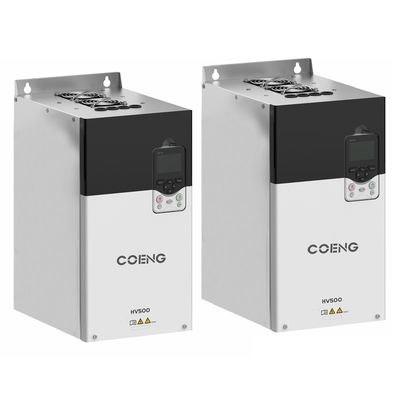
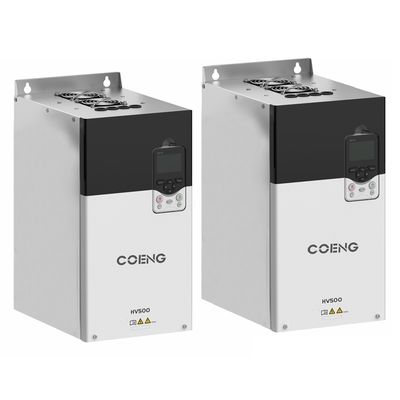
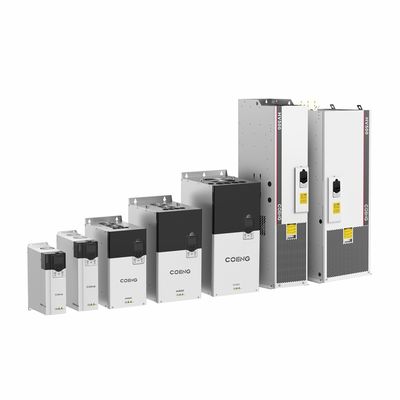
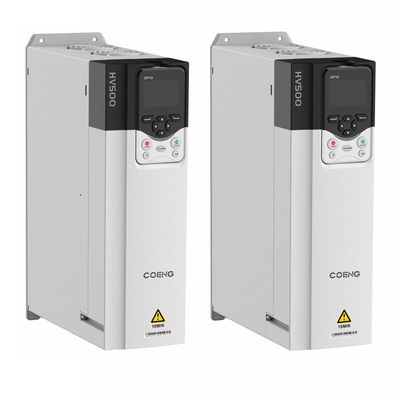
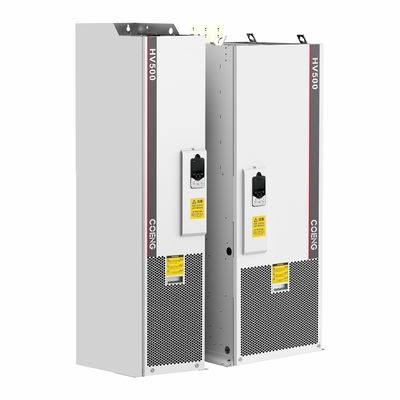
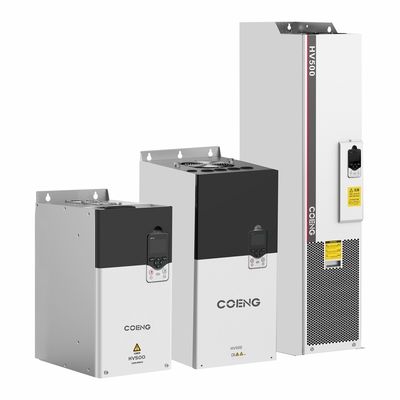
User-Centric VFD with Keypad, UP/DOWN Terminals, and Free Function Blocks for Easy Operation and Setup


| مكان المنشأ | الصين |
|---|---|
| اسم العلامة التجارية | COENG |
| إصدار الشهادات | EC |
| رقم الموديل | HV500 |
| الحد الأدنى لكمية | 1 |
| تفاصيل التغليف | كرتون ، حالة الخشب الرقائقي |
| وقت التسليم | 10-30 أيام العمل |
| شروط الدفع | L/C ، T/T ، Western Union |
| القدرة على العرض | 20000SETS / سنة |

اتصل بي للحصول على عينات مجانية وكوبونات
ال WhatsApp:0086 18588475571
(ويتشات): 0086 18588475571
سكايب: sales10@aixton.com
إذا كان لديك أي مخاوف، نحن نقدم المساعدة على الانترنت على مدار 24 ساعة.
xتفاصيل المنتج
| درجة الحماية | IP20 | طريقة التبريد | تبريد الهواء القسري |
|---|---|---|---|
| كفاءة | 5.5 كيلو وات ~ 22 كيلو وات: ≥93%؛ أعلى من 30 كيلو وات: ≥95% | مساهمة الجهد | 200 فولت (-15%) ~240 فولت (+10%) ثلاثي الطور، 380 فولت (-15%) ~480 فولت (+10%) ثلاثي الطور، 500 فولت |
| تردد الإدخال | 50 هرتز/60 هرتز ±5% | جهد الخرج | 0 فولت ~ جهد الدخل |
| تردد الإخراج | 0 هرتز ~ 500 هرتز | ||
| إبراز | VFD inverter with keypad,user-centric VFD with terminals,VFD frequency inverter with function blocks,user-centric VFD with terminals,VFD frequency inverter with function blocks |
||
منتوج وصف
Operation panel
HIC200-OP-10-W is a smart operator panel developed independently for high-performance transmission products, which is informative, friendly and easy to use, and according to the different configurations of the panel, it is divided into two kinds: wiFi function and without WiFi function, which are conveniently applied to high-performance, single transmission, multi-VFDs system, it can monitor and adjust the system.
Accessory
| Optional | Module | Function |
| Keyboard Base | HVKMB | Depending on the situation, the base can be installed in the specified position and the drive can be operated by operating the keyboard |
| Communication Adapter | HVCOM-USB | The drive can achieve high-speed communication with the computer via this option |
| Profibus-DP Expand Card | HVCOM-DP | It is for Profibus-DP bus communication, It can fulfill the monitoring and diagnostics of inverters |
| ABZIncremental Code disk Expansion Card | HVPG-ABZ | Code disk expansion card, incremental code disk for ABZ signal output, power programmable control, compatible single/bipolar output of the code disk |
| CANopen Expansion Card | HVCOM-CAN | It is for CANopen bus commnication, it can fulfill the monitoring and diagnostics of inverters |
| Three-phase voltage detection module | HVVMU | Detection of three-phase voltage, it can be used for permanent magnetic synchronous motor soft start grid, speed tracking and other functions |
Technical Specification
| Technical Specification | ||
| Input/output Power | Input Uin | 200V (-15%) ~240V (+10%) 3Phase , 380V (-15%) ~480V (+10%) 3Phase, 500V (-15%) ~690V (+10%) 3Phase |
| Input Frequency | 50Hz/60Hz±5% | |
| Unbalance Degree of Uin | ≤3% | |
| Output Uout | 0V~Input Uin | |
| Output Frequency | 0Hz~500Hz | |
| Control Performance | Motor Type | Asynchronous / Synchronous |
| Control Method | V/F, OLVC (Open-Loop Vector Control), CLVC (Close-Loop Vector Control) | |
| Range of Speed Regulation | 1:10 V/F, 1:100 OLVC, 1:1000 CLVC | |
| Start Torque | VF: 100% (0.5Hz), OLVC: 150% (0.5Hz), CLVC: 180% (0Hz) | |
| Torque Precision | ≤5%, Vector Control | |
| Torque Pulsation | ≤5%, Vector Control | |
| Speed Regulation Precision | OLVC 0.2%, CLVC 0.01% | |
| Torque Response | ﹤5ms, Vector Control | |
| Dynamic Speed Reduction | OLVC<0.5%*s, CLVC<0.3%*s | |
| Acceleration and Deceleration Time | 0.0s~3200.0s, 0.0min~3200.0min | |
| Torque Lifting | 0.0%~30.0% | |
| Overload | Heavy Load Application 150% 1min/5min, Light Load Application 110% 1min/5min | |
| V/F Curve | Multiple ways: linear V/F curve, 5 kinds of torque reduction characteristic curve mode (2.0 power, 1.8 power, 1.6 power, 1.4 power, 1.2 power), user-defined VF curve | |
| Input Frequency Accuracy | Digital: 0.01Hz, Analog: 0.01Hz | |
| Control Performance | Acceleration and Deceleration Curve | Straight, S Curve |
| Multiple Speed-Steps Operation | 16-Speed Steps Operation through control terminals | |
| Automatic VoltageAdjustment (AVR) | Keeping the output voltage constant automatically when the grid voltage changes within a certain range | |
| Fixed Length | Setted and Fixed Length Control | |
| In-build PID | It Can Easily Constructed Closed loop control system | |
| Enhencement Function | Free Function Block | |
| Input/output Power | Set Frequency | Keyboaed, UP/DOWN Terminals, Multiple Speed-Steps Operation, Terminals Pulsation, Com |
| Analog Input Terminals | AI1: 0V~10V/-10V~10V, AI2: 0V~10V/0(4) mA~20mA | |
| Digital Input Terminals | DI1-DI6, 6 programmable digital input terminals, optocoupler isolation, compatible with drain/source input | |
| Digital Input/Output Terminals | DIO1: Fast pulse output, normal input/output; DIO2: fast pulse input, normal input/output | |
| Anolog Output Terminals | 2 Strings 0V~10V/0 (4) mA~20mA | |
| Relay Output | 2Strings Contact Type FormC | |
| Motor Temperature Detection | Support PT100/PT1000/KTY84 | |
| STO Interface | SIL3/PLe Safe torque shutdown function | |
| Com | Com Protocol | Modbus RTU (Standard), Pro ibus, CANopen, pro inet, Devicenet, Ethercat |
| Environment | Altitude | Without Derating Operation Within 2000m Altitude; 2000m~4000m, Each 100m lifting, Derating 1% (Current) |
| Operation Temperature | -25℃~+40℃ (40℃~55℃ Derating) | |
| Humidity | 15%~95%, Without Condensation | |
| Vibration | 3M3, IEC60721-3-3 | |
| Storage Temperature | -40℃~+70℃ | |
| Operation Place | Indoor, Without direct sunlight, no flammable, corrosive gases, liquids and conductive particles | |
| Accessory | Encoding card, communication expansion card, voltage detection card | |
| Protection Function | Short circuit, over current, overload, over voltage, under voltage, phase loss, over temperature, external fault, etc. | |
| Efficiency | 5.5kW~22kW: ≥93%; Above 30kW: ≥95% | |
| Installation Method | Cabinet | |
| Protection Degree | IP20 | |
| Cooling | Forced Air Cooling | |

Germany
- Q1: Is the HV500 compliant with European efficiency regulations?
A: Yes, it meets EU standards with high efficiency (up to 95%) and low harmonic distortion. - Q2: How precise is the speed control for German precision engineering applications?
A: With CLVC, speed regulation precision is 0.01%, ideal for CNC and automated systems. - Q3: Can the HV500 integrate with Siemens PLCs?
A: Yes, it supports Profinet and Profibus, ensuring compatibility with Siemens and other German automation systems. - Q4: What cooling methods are recommended for high-duty cycles?
A: Forced air cooling ensures optimal performance even in continuous operation common in German manufacturing. - Q5: Does the HV500 support safe torque off (STO) as per IEC standards?
A: Yes, STO is SIL3/PLe certified, meeting strict German safety norms. - Q6: How does it handle grid instability in rural areas?
A: The AVR function maintains output voltage consistency, and it tolerates voltage unbalance up to 3%. - Q7: Is the HV500 suitable for cold storage facilities?
A: Yes, it operates at temperatures as low as -25°C, perfect for logistics and refrigeration. - Q8: What motor types are compatible?
A: It works with asynchronous and synchronous motors, offering flexibility for various applications. - Q9: Can I use the HV500 in multi-motor setups?
A: Yes, with its programmable terminals and communication options, multi-motor control is easy. - Q10: How does the HV500 contribute to energy savings?
A: High efficiency and smart power management reduce operational costs, a key focus in German industry.
المنتجات الموصى بها